Saturday, 19 November 2011

Santiago de Chile - Part I


Day 1: Arriving in Santiago de Chile
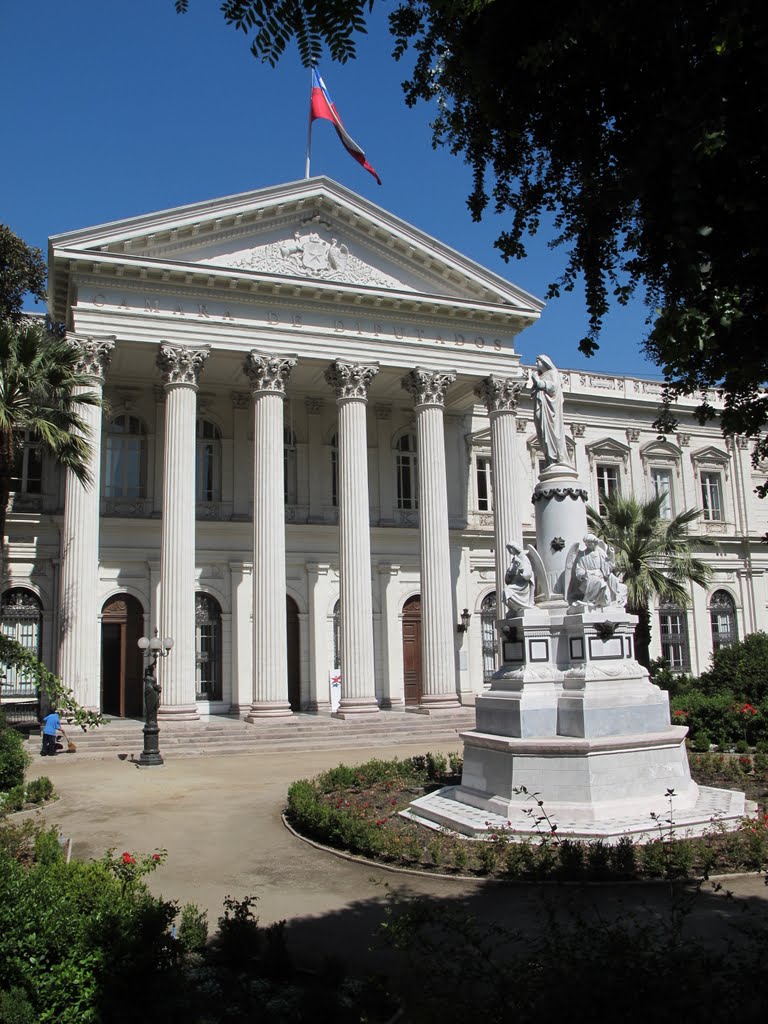
The ex-congress house
Santiago de Chile is the country’s capital. When we got to the bus terminal we immediately rushed to the metro (tube) station nearby as we had read that the taxis in this bustling city can cost an arm. Walking was ruled out because of the sheer size of this metropolis: Santiago is big, no huge and is home to 7 million people i.e. 40% of the country’s population. We went to the EcoHostel which prides itself to be environmental friendly: sorting bins, environmental messages everywhere, a board for guests to leave comments on, etc. 

I think I will seize this opportunity to comment about some of the improvements they could easily do to save heaps of water. Investing in a dishwasher instead of letting each and every guest  wash up will reduce this consumption by about 10 and fix their showers because in the current state of affairs it takes about 2 minutes to reach the balance of temperature again resulting in about 40L of water loss. Anyway they’re trying… 

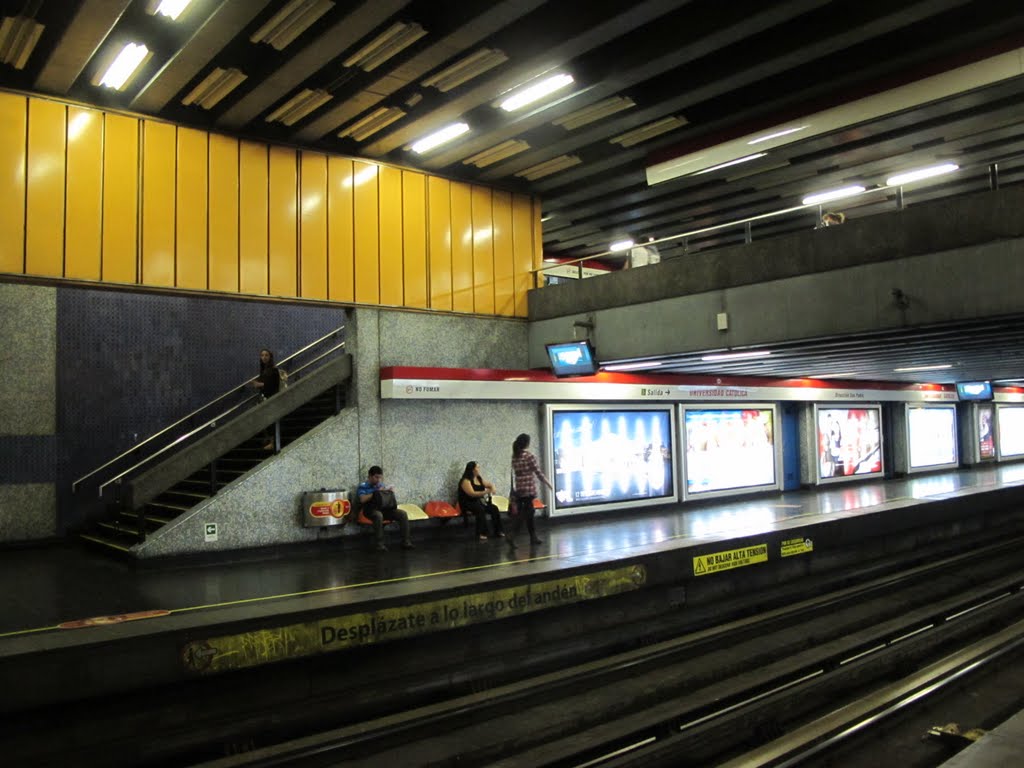
A metro Station in Santiago
We put our bags down and immediately headed out to the ticket office downtown to get tickets for two very important events : Chile vs Paraguay WC2014 qualifyers and the Pearl Jam concert. We took the metro there and back. It’s amazing how this metro resembles the metro in Brussels. They must have been built around the same time and using the same model. When we reached home we flung by the supermarket to stock up on food and booze!


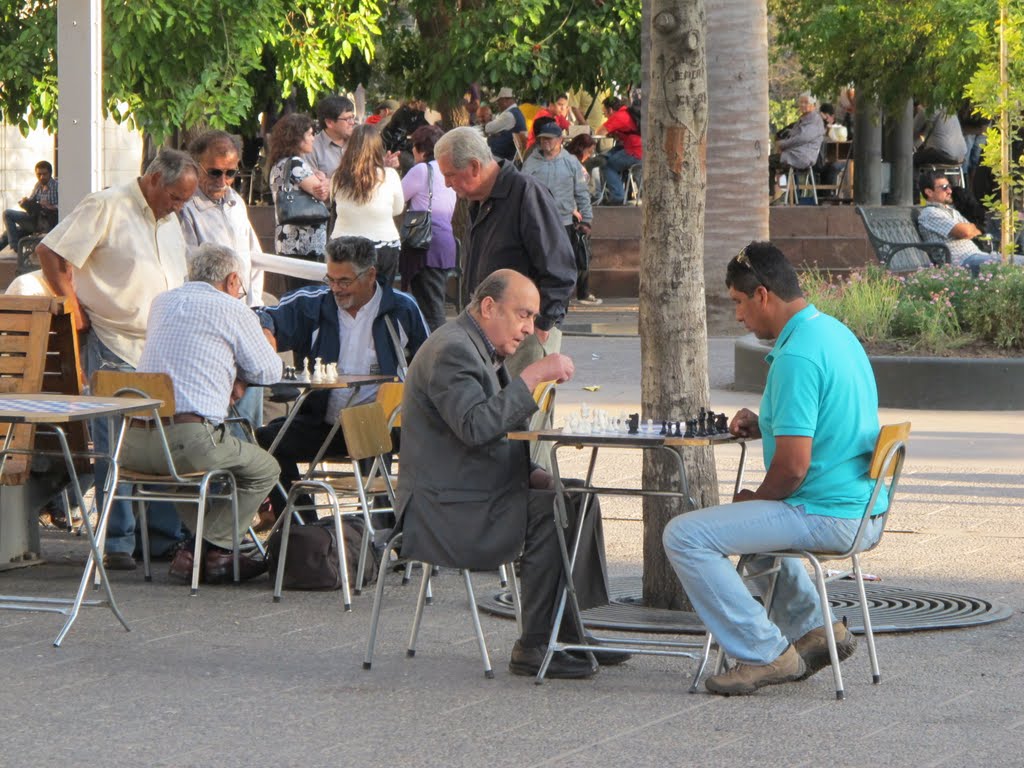
People playing chess in Plaza de Armas


Day 2 : Beer festival
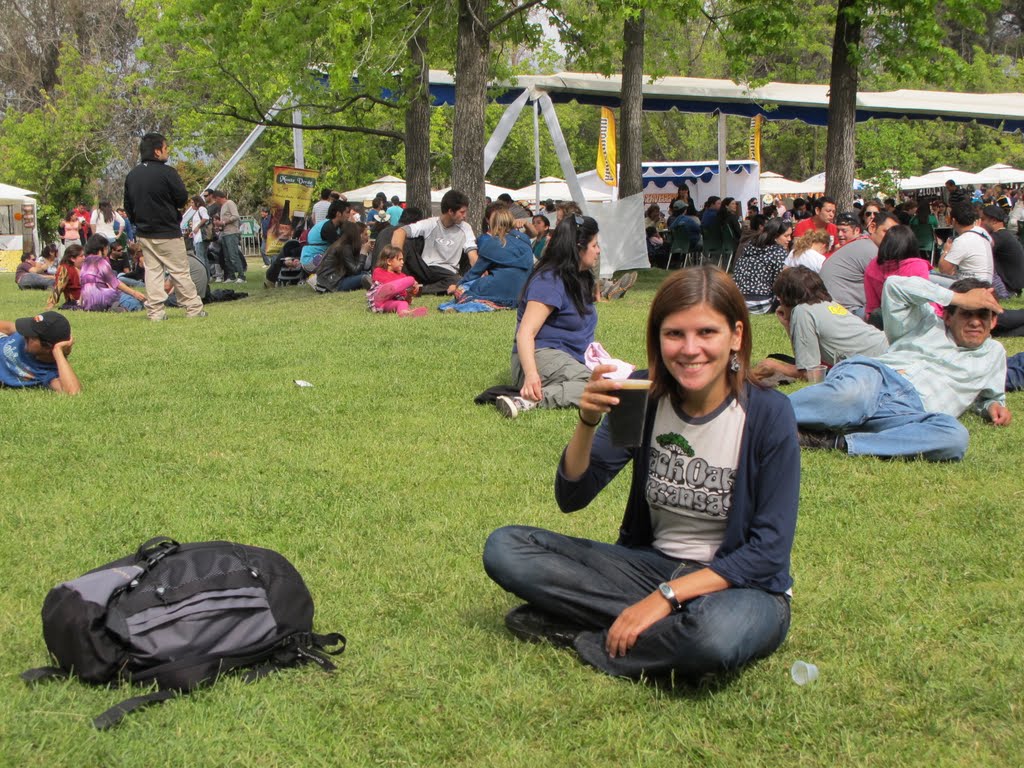
Enjoying a dark beer - refreshing and comforting!
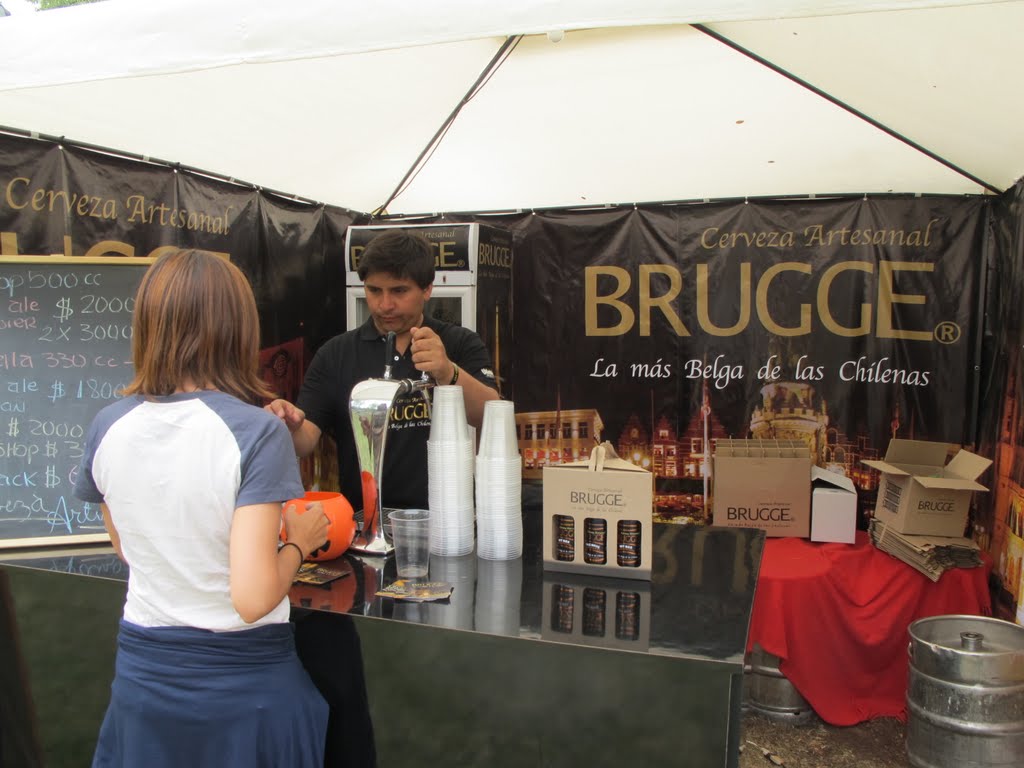
With Roxana taking care of the organization there was no way that we would miss any happening in this city. So, sure enough she read about the annual Beer Festival going on in Santiago’s select country club in the week-end. Chile welcomed a sizable German influx after the second world war. They did not only bring leather shorts and 6-hour long operas but also a big beer tradition. The festival takes place every year exactly 2 weekends after the Chilean “Oktober Fest”. In any case we sampled about 30 different beers and headed back into town a little bit “intoxicated”. We met François and Capucine at the Plaza de Armas and went on a stroll in the arty part of town called Lastarria. We enjoyed the relaxed atmosphere and had a drink to unwind from being constantly on vacation! Even though it was happy hour and Roxana had a Pisco Sour, I only had a Sprite …

More pictures of Santiago Beer Festival

Of course Belgian beer is also present

Day 3 : Free Walking Tour
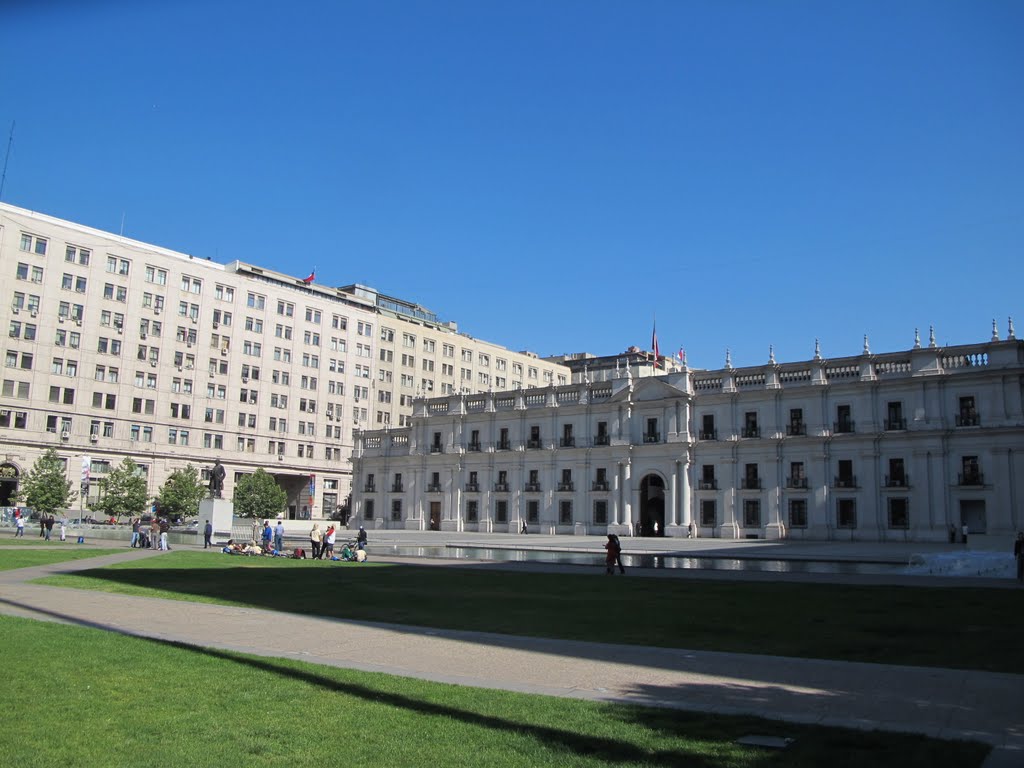
La Moneda filled with history and symbolism
On the third day we showed up in front of La Moneda starting point of one of the two Free Walking Tour of Santiago. It was a four hour long tour starting at 10am which would take us to all the interesting and important parts of town. Our guide, Francisca is a theatre actress with a great all round knowledge of Chile, it’s history and socio-economics. She also had a keen eye for the bars and restaurants in town. So we got the tour and excellent advice of where to go out and what to eat in Santiago and Valparaíso.

We saw and lot of Santiago and understood a little more what had happened on 9/11 1973 when a successful coup from General Pinochet ousted democratically elected Salvador Allende. We also walked through the university areas and stopped in front of Pablo Neruda’s home.


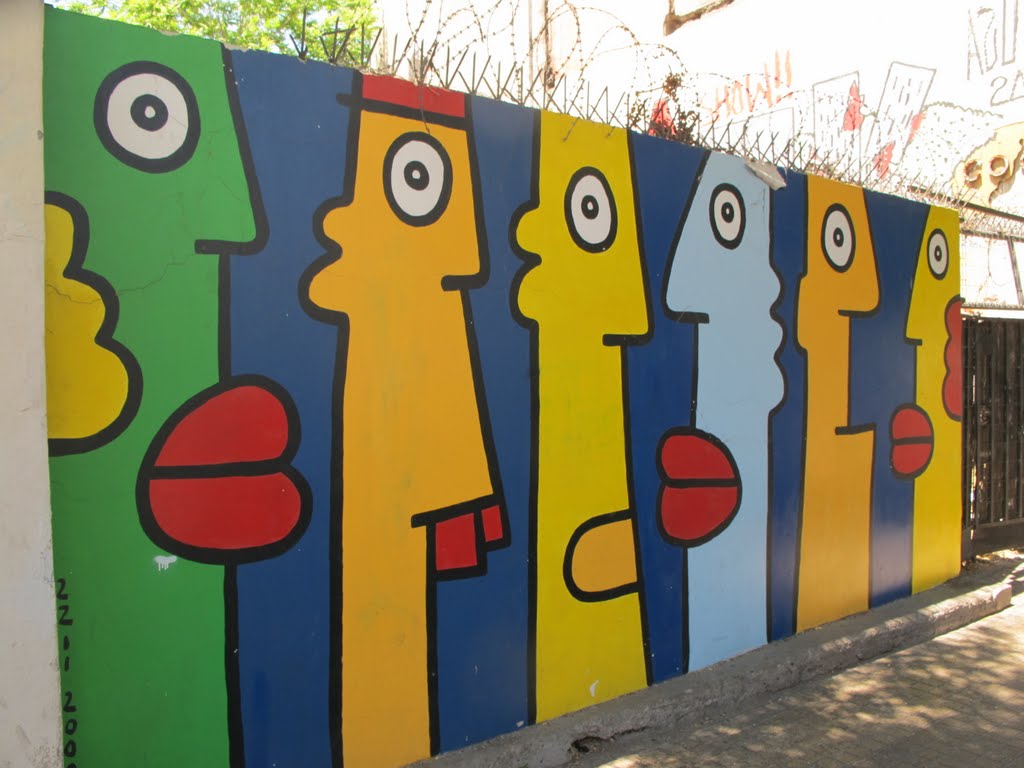
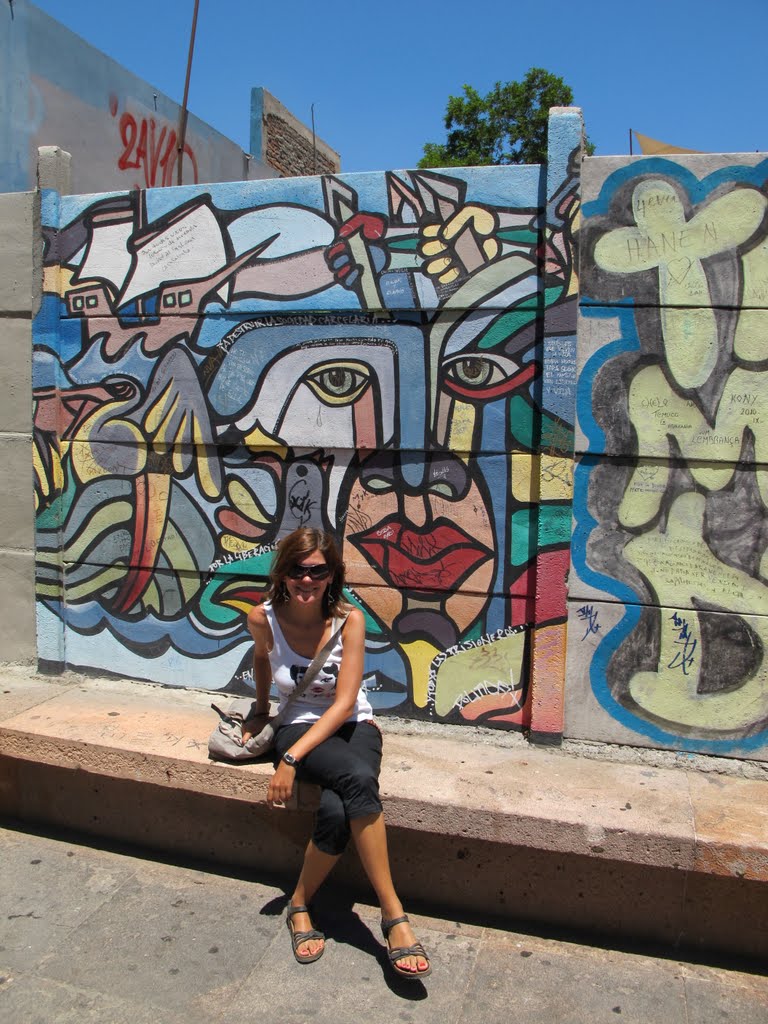
Street art are very common in Santiago
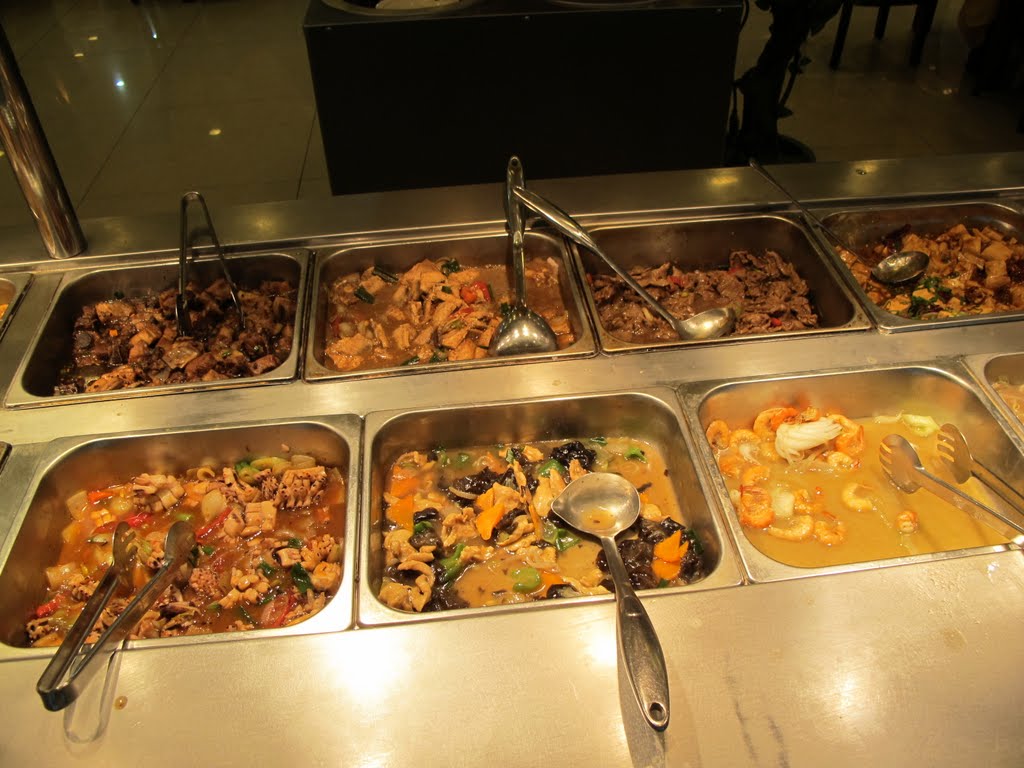
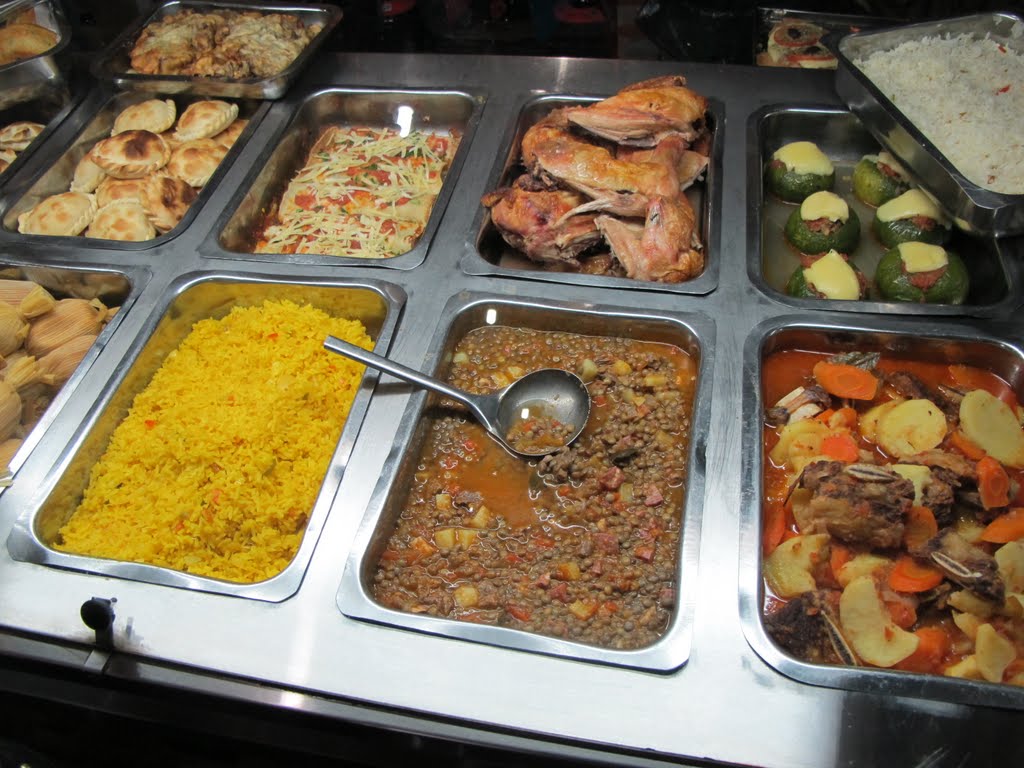
After the tour we climbed up to the Virgin of Santiago to have an incredible view of the city. That evening we went to an all you can eat Chinese buffet. It was finger licking good: the colours, the aromas and taste. They also had a BBQ station as well as Sushi and Ice Cream stands … I wish I could have gone with some of my cousins from Mauritius, we would have made them reconsider their commercial strategy!


Day 4 : Pablo Neruda’s home and Football
 
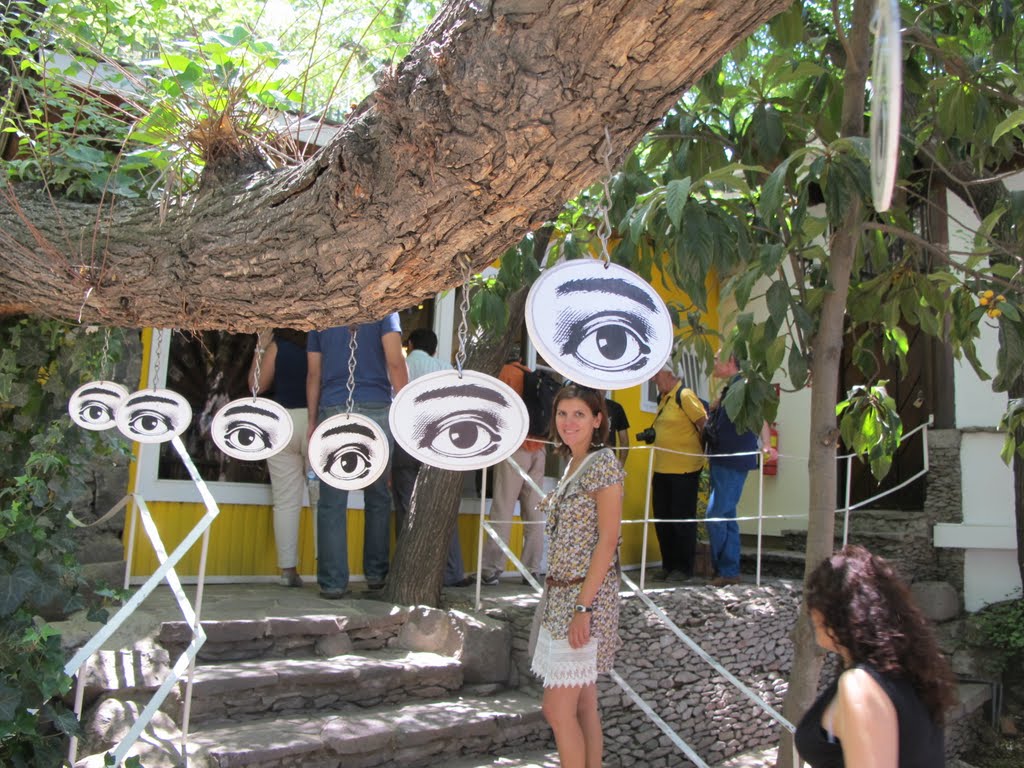
Pablo Neruda´s home in Santiago
Pablo Neruda is one of the greatest poets the world has known. Although he could not swim, he was passionate about the sea and built all 3 of his houses in the form of boats. The interior design also reminds that of ships. He even created an artificial pond around his house in Santiago to further enhance the impression of a sea faring vessel. He wrote thousands of poems about the ocean and received the Nobel prize for literature in 1971.


Mural Art close by Neruda´s house
As a member of the communist party he has had to live long years in exile while Chile was under military governments in the 40-60’s. He lived in Italy, Romania and France where he studied and taught French. When he returned to the country he was celebrated nationwide and the President (and long time friend) Salvador Allende bestowed upon him the important task to explain to the world that the socialist revolution going on in Chile in the early 70’s was not of the same nature as the ones that swept through the communist block in Europe or Cuba. He was therefore sent as ambassador of Chile to France. Unfortunately ill health forced him to return and the coup of General Pinochet and the heroic suicide of Salvador Allende that day finished to overcome this great poet. He died 12 days after Chile fell once again to a military dictatorship.


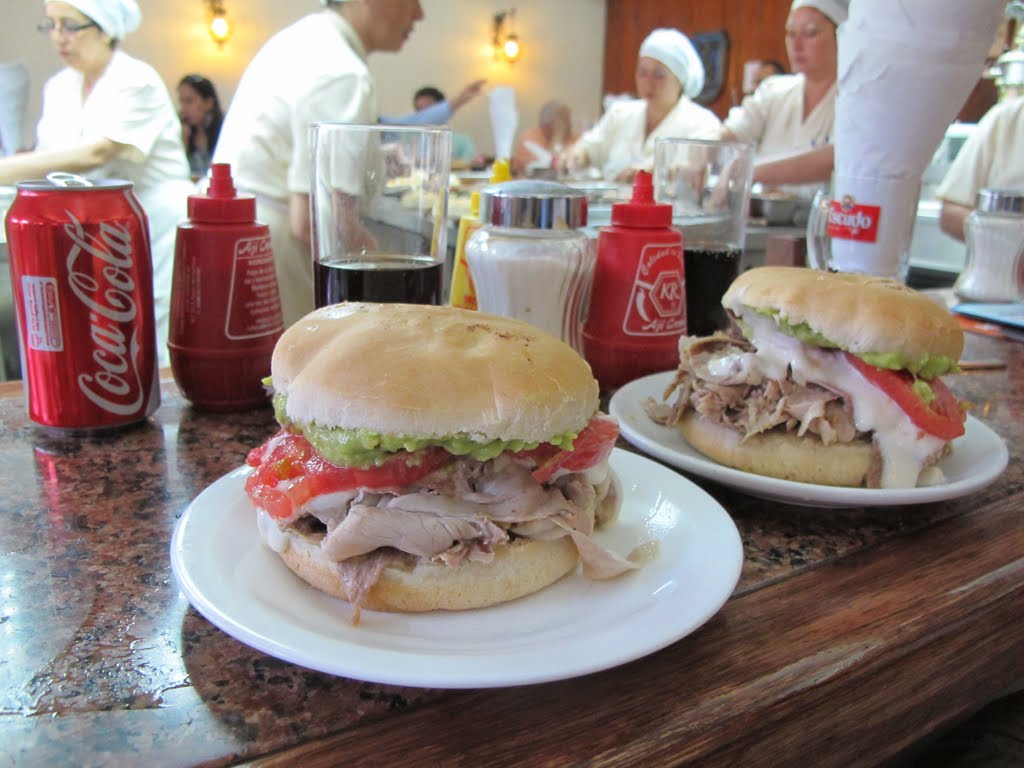
This huge sandwich would make any football fan happy!
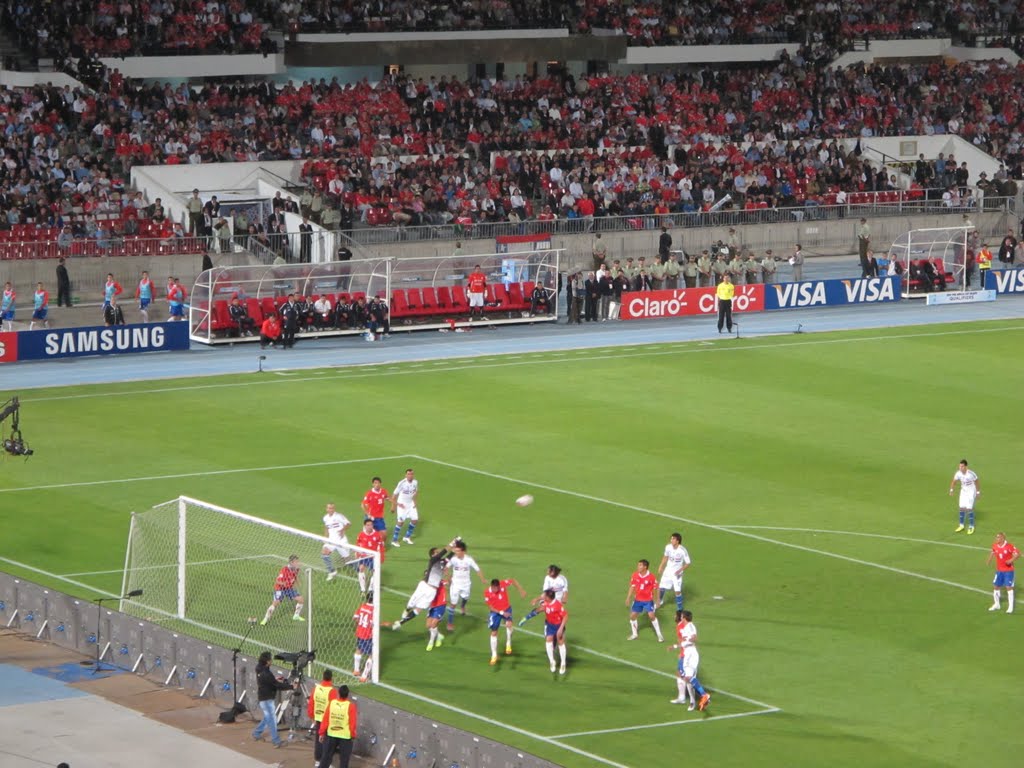
That evening we were in for a treat as we went to the Estadio Nacional to see Chile cross swords with Paraguay for the 4th leg of the 2014 world cup qualifiers. But before we went for a traditional sandwich in the center. I will quote the travel guide we´re using here regarding Chilean food: "What Chile lacks in spice and diversity it compensates in abundance". Spot on dear guidebook writer!

The qualifiers have rarely been so close. Brazil is already qualified as host nation and Uruguay (current South American Champions) is leading the pack. But behind 5 teams sit within 2 points of each other with this year Ecuador and Venezuela have shown that they are in contention too. It’s going to be tough for Chile especially after losing 0-4 to Uruguay (3½ goals from Suarez!) only 4 days before. 

Just before the game the tension is palpable
We took a metro to the stadium and immediately started soaking up the atmosphere. There had been a lot more red shirts in the city that day but this was something else. This was a red tidal wave, every one was chanting and street side vendors were selling cold beverages, grilled sausages in bread and all kind of unofficial merchandise: shirts, caps, wrist bands, you name it. Private citizens living close to the stadium were out on the street, trying to rent parking spaces for spectators who had driven there. Most of them were successful.

We entered the stadium and after a very slack body and bag search, we climbed to our section. There were no designated seats so we had to look for the best we could get given our position relative to the field. I think we did alright.

The Chilean goalkeeper fending off the opposition
The goalkeepers were already warming up and later when the Chilean national team trod onto the pitch the roar was impressive. The Chilean supporters are known to be the most devout in South America and they truly lived up to their reputation. The game was underway and Chile was playing well. But Paraguay was equally good on the deck and even better in the air. By the 30th minute Chile had been pushing long enough to be rewarded with a goal. It was as if one million volts of electricity had gone through the stands, the atmosphere was INCREDIBLE. After a fairly eventful 2nd half during which Paraguay could have leveled the score, Chile sealed their victory with a late second goal. We left the stadium and ran to the Metro station to beating the crowd to it. Surely the celebration must have gone on well into the night at Plaza Italia. 

More photos of Chile vs Paraguay

Day 5 : Museo de la Memoria and Pearl Jam
Listening to Allende´s last speech minutes before dying
We could not miss the Museo de la Memoria which collects all the elements of the General Augusto Pinochet’s Regime and masterly blends them into a superb ensemble. The Chilean people want to remember and want to share testimonies of this terrible period with as many people as they can, especially the younger Chilean generations. This is also why they make it a point to keep a free entrance to this museum. School parties visiting the museum may be seen everyday.

There are posters and texts that explain what Pinochet and his accomplices did to foment a successful coup. There is a timeline minute by minute of the 5-6 hours that fateful day of September 11, 1973 when Chile slipped into one of the worst periods of its history qua human rights violations and political freedom. They also present the findings of the "Truth and Reconciliation Commission" which worked on the Chilean case.


Exposition on fascism
All in all that was one of the best museums we’ve been to.


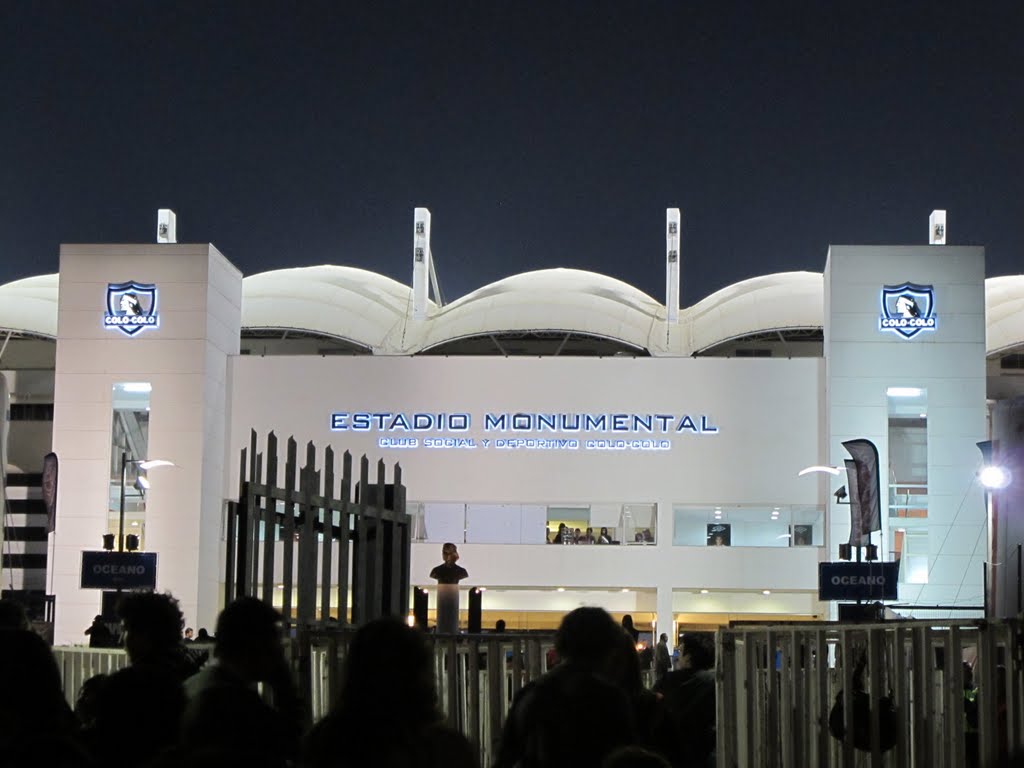
The beautiful Estadio Monumental
That evening we went to something completely different : a Rock concert. We had booked those Pearl Jam tickets a long time ago over the Internet and picked them up from the ticket office in Santiago. We took a metro to the Estadio Monumental and we’re impressed by how it looked from the outside. Beautifully lit and ultra modern. Because of it´s roof, a section of it looked exactly like the Jacques-Chaban-Delmas Stadium in Bordeaux, France.


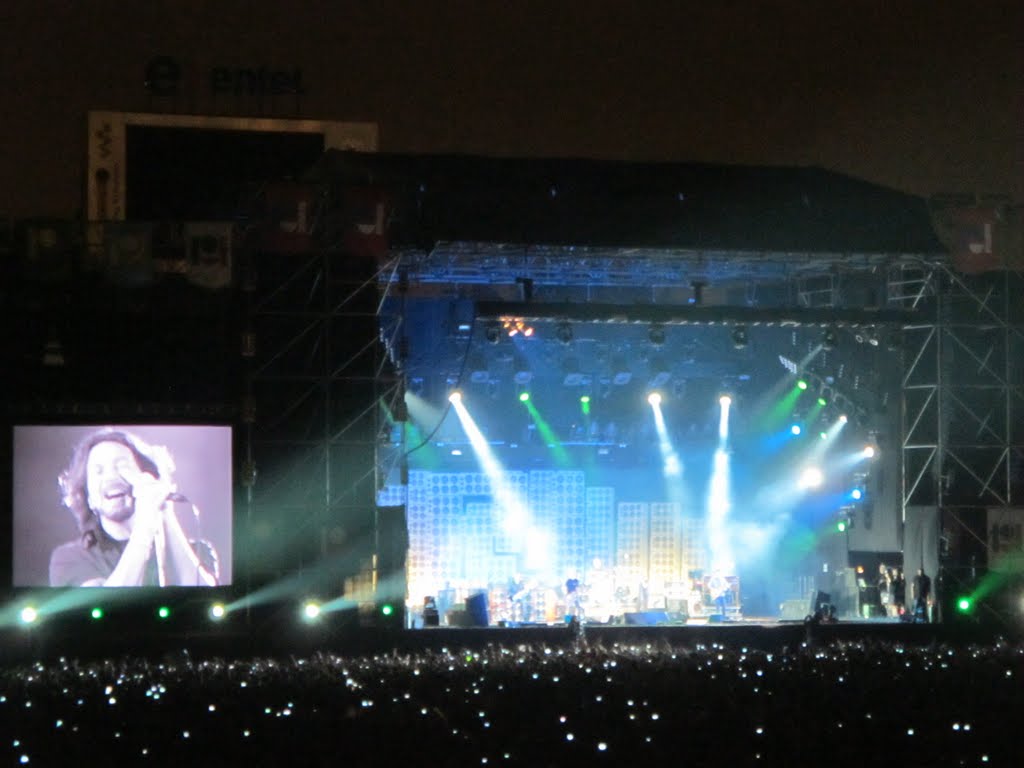
Eddie Vedder giving the hell of a show
We went in and 40.000 red hot fans were already clapping for the artists to come onto stage. When they did the crowd went crazy but when Eddie Vedder, a bottle of Chilean wine in his hand, addressed the crowd in Spanish we could barely hear his voice over the microphone! That’s how loud they cheered. The whole concert was a great experience and the South Americans live up to their party reputation. They knew the lyrics to each song, and jumped ALL the time! I can’t even imagine how it must be to watch a Latino superstar such as Ricky Martin or Shakira perform live here.  It must be an experience from another world. After the concert we took a bus that swiftly got us home and we were in bed by 1.30am.

For more Pearl Jam Pictures


Sunday, 13 November 2011

Mendoza


Day 1
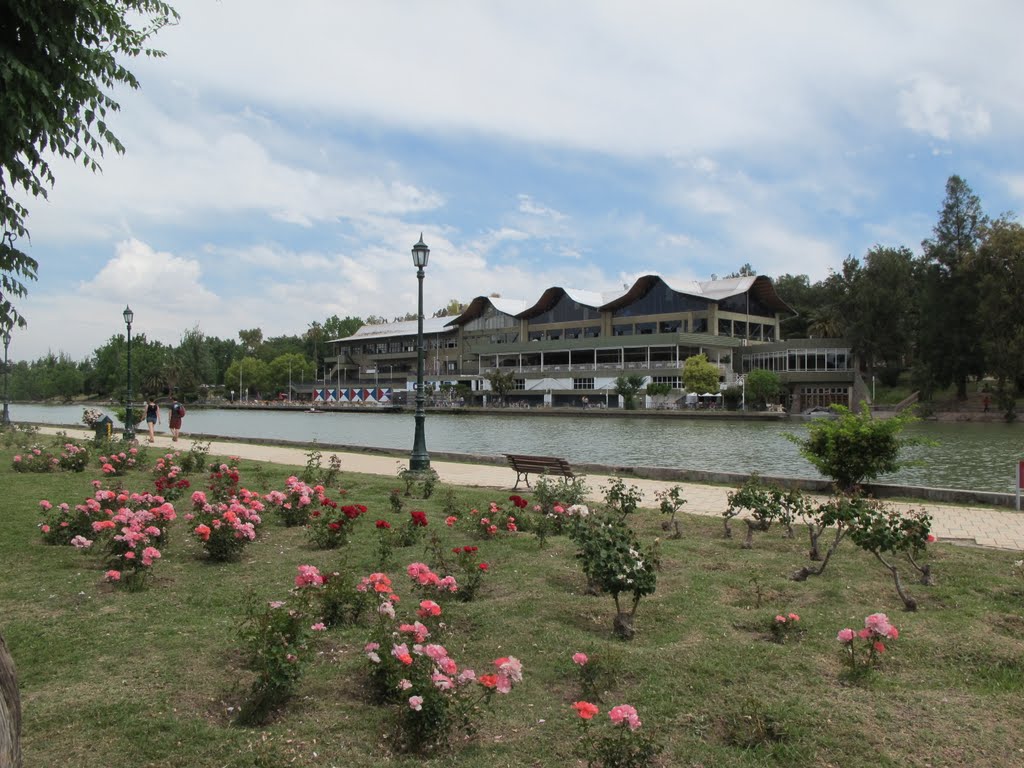
Roses and the rowing club in the background
We arrived in Mendoza in high spirits. The state of Mendoza, with about 1500 producers is the biggest wine region in Latin America and we were hoping to enjoy a lot of it. On the first day when we took our quarters, I resisted the urge to pick a DVD out of the huge selection of 600 they had at the hostel and we set off to discover the town. We first walked to the central market which unfortunately was half closed as it was lunch time. We nevertheless enjoyed a quick and plentiful lunch. Then we proceeded to the huge municipal park at the edge of town. It is an enormous park, built on the model of the “Parc de la  Tête D’Or” in Lyon. There is a lake and a rowing club inside the park. We walked a little under 15km that day in Mendoza moving from the super rich neighbouhoods with beautiful villas and top-end alarm systems to the more modest areas of the city.


Day 2

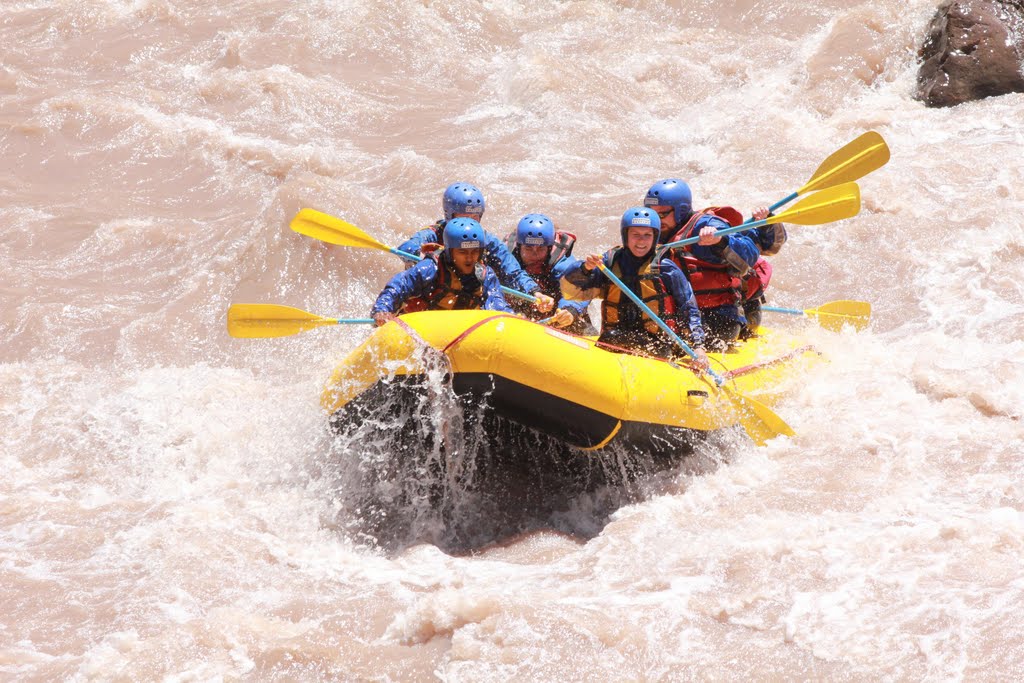
What a rush!
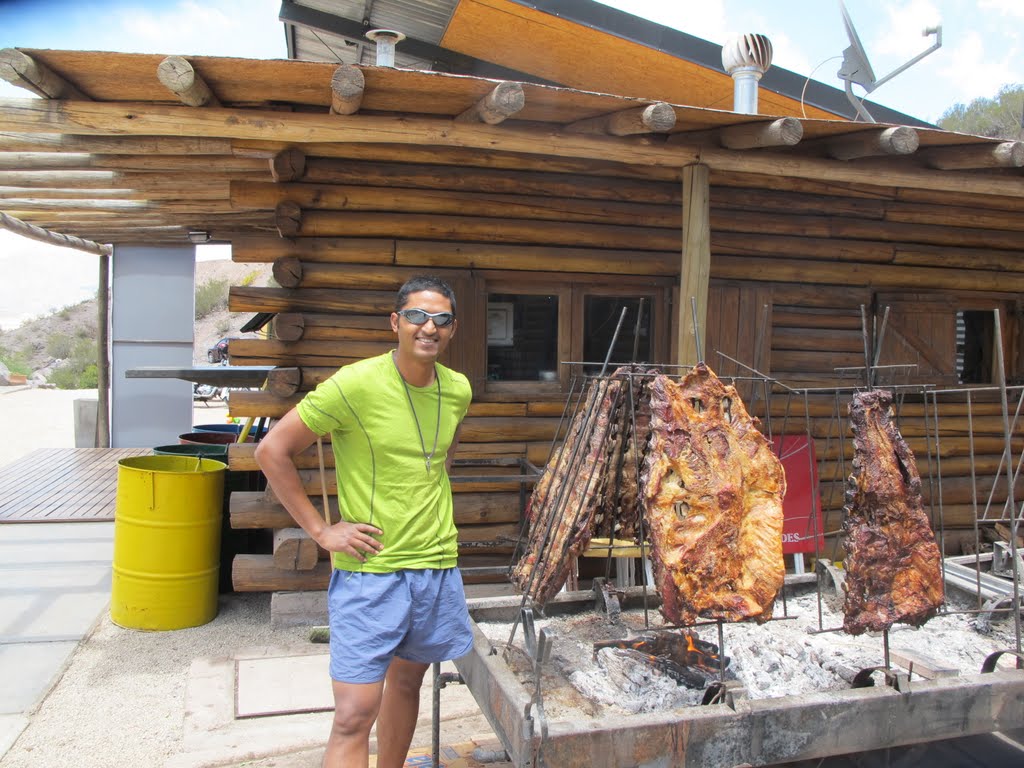
 We decided to take adrenaline shots on the second day by doing some rafting and zip lining. The tour bus picked us up at our hostel and after an hour’s drive we got to the rafting center. It was a beautifully built wood, steel and glass structure, perched high up and overlooking the whole valley. We were driven to the start of the course, given our briefing and put in the rafts. Diego was our instructor and he was fun. We particularly enjoyed the water fights with other crews when we caught up with them. The 6 man crew cooperated well and we swerved and dodged rocks and got through the 12km course without a scratch nor anyone being thrown overboard (as opposed to the other boats). When we got back to the center, we were cold, wet and starving. We were greeted by a sight from heaven : asado, gaucho (Gaucho) style!

For exciting pictures on Rafting...


That´s what I call a BBQ


That's my Kevin´s Special
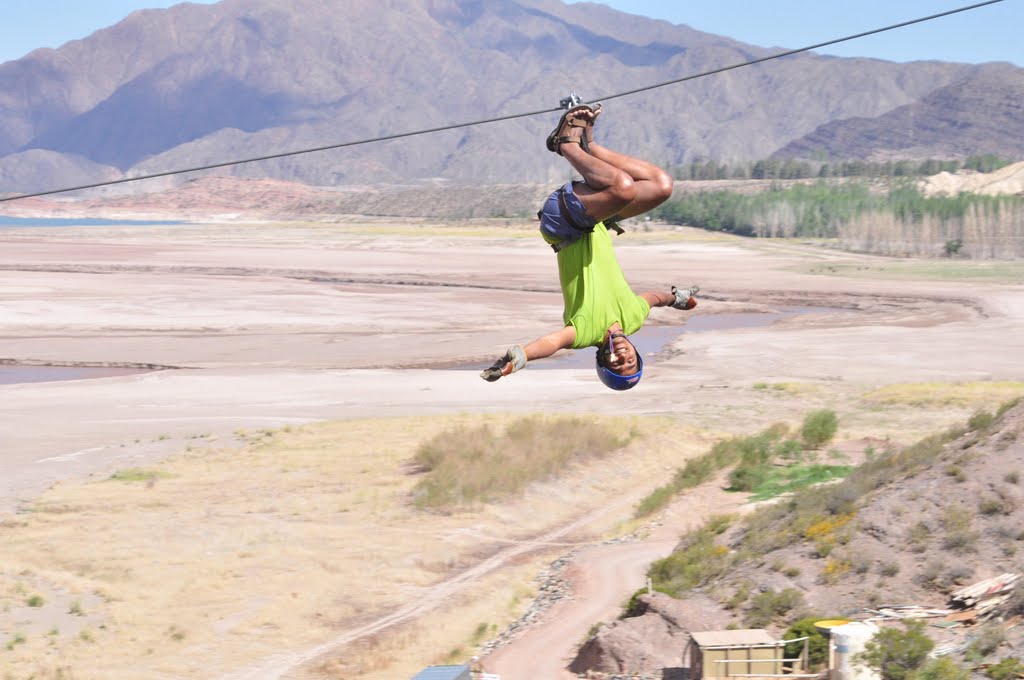
 In the afternoon we geared up to do some zip lining. We climbed up to the first line and “zipped” away! There were 4 “warm up” lines and the last two lines were over 400m. When it came to it, I did my usual reverse flip. The instructors were surprised and one of them told me not to do it again! (They are definitely more strict on security in Argentina). Anyway I had some fun and showed them zip lining could be done another way.

And funny pictures of  Zip Lining


Day 3
Barely managing to bike after all the wine tasting!
On the third day we took a bus and went to Maipu to visit some wineries. We went there with François and Capucine who also stayed in our hostel. We got complementary bikes from Mr. Hugo. We started with a chocolate factory where we were given some liqueur to accompany our chocolates. Then we visited a couple of wineries. To be honest we were not too impressed by the wines. And at 20 Pesos per tasting (as compared to being free in Cafayate) I expected better quality.
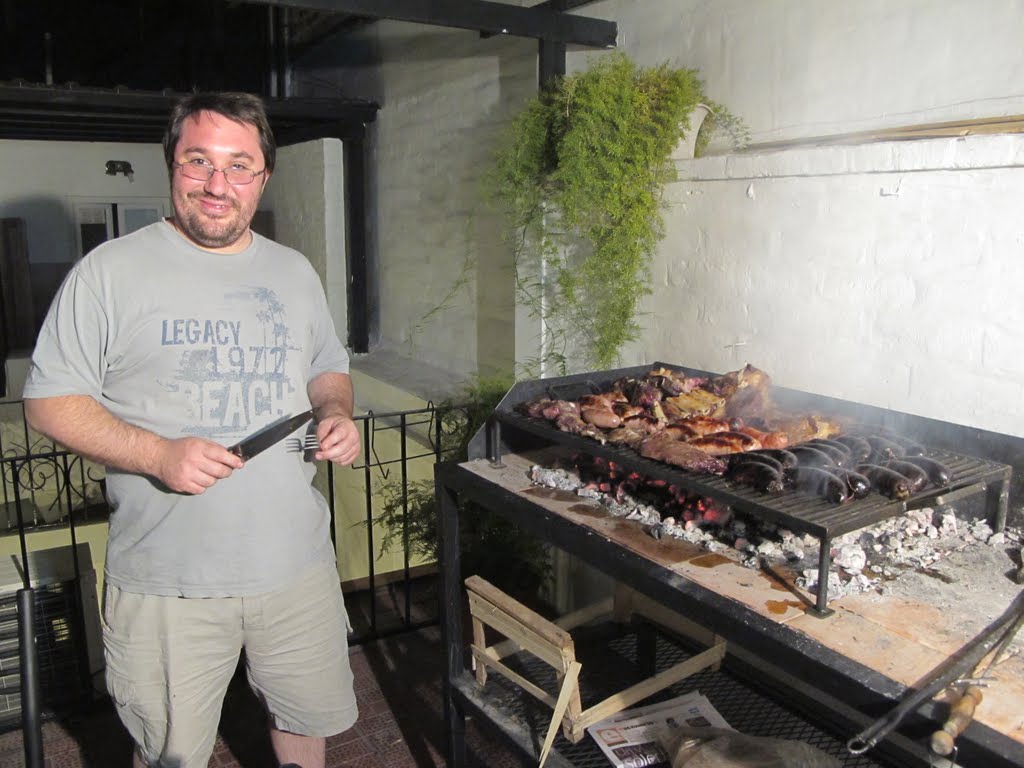
When we arrived home late that day we only had time for a hot shower before dinner was served. We had signed up for the traditional Argentinian BBQ that our hostel organizes every Thursday. We put our feet under the table and let Javier and his team do their magic.

Javier in front of the Asado 


Day 4
Relaxing in a warm pool
On our last day we went to relax at thermal baths an hour away from Mendoza. We arrived there and entered the pools. There were big ones and small ones, cold ones, warm ones, with and without bubbles. We stayed there till mid afternoon and took a bus back in town just in time for the Argentina vs Bolivia game on TV. Now this is a sad story: Initially the Argentinian Football Federation had a disagreement with the River Plate Club in Buenos Aires and they announced that this game would be played in Mendoza, where we would surely have been in the stadium. But only a couple of weeks before the game, they announced that the game would be played in BA as they had reached an agreement with River Plate … bummer. In any case the game finished 1-1 and there is now some more pressure on Argentina as they lost the game before that away to Venezuela.

For more pictures of Mendoza

After these eventful days in Mendoza we took an early bus to Santiago de Chile.


Different liqueurs at the chocolate factory

Tuesday, 8 November 2011

Córdoba


The main Church of Córdoba

We came to the oven called Córdoba. I say oven because we really felt the heat here. 30-35 degrees every day all day. It gets better after 6pm though. Córdoba is the 2nd city in Argentina with 1.3mln people. It is a big bustling city with a lot to do.


At the art gallery


Paolo giving it his best
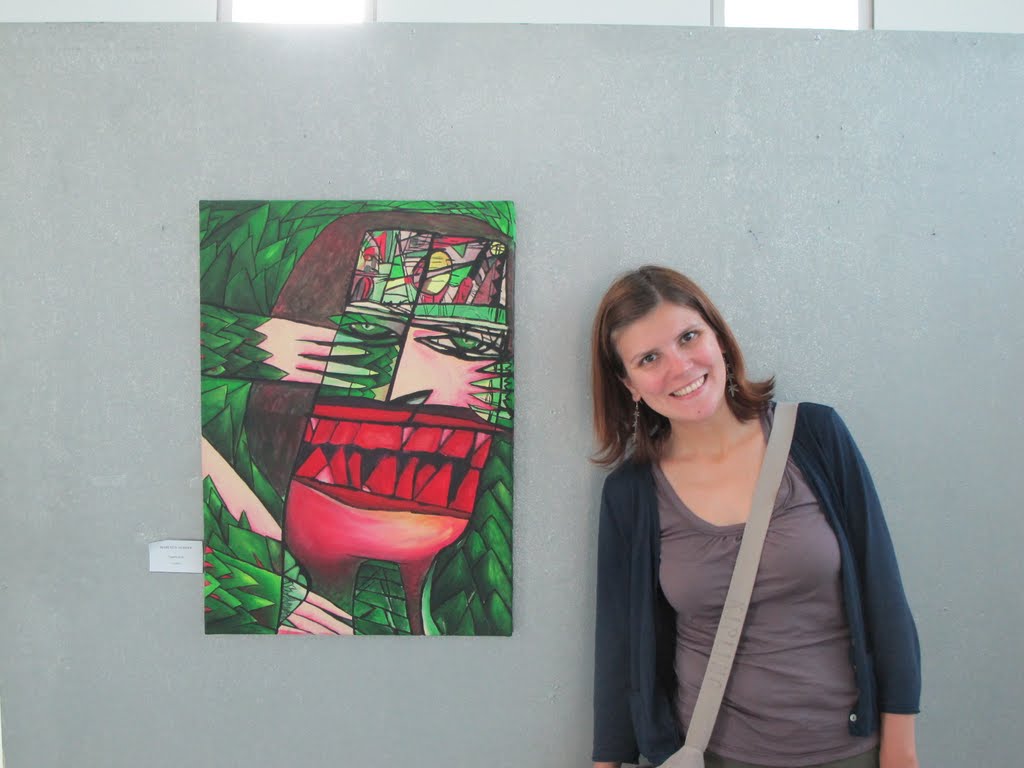
As usual when we get to a big city we dove into the cultural agenda of the city and started touring. We visited an art gallery and a photo exhibition. It was ok but not exceptional. There was a jazz festival going on in the city and we booked tickets for a Sunday evening concert. We saw a great Argentinian duo: Gaby Beltramino (singer) & Eduardo Elia (pianist) and an Italian quartet: Paolo Fresu Devil Quartet. Gaby had a golden voice and Paolo transmitted so much energy to the public through his trumpet. It was an excellent night out.


Roxana shopping away
We also went to a huge artisanal market in the Boehme neighbourhood of Córdoba. Roxana bought a few items she liked and set us back 150 pesos or so. So I retaliated with Ice cream and freshly baked filled calzoni, watermelon etc. I could not match the spend though!

Then on the last day we took a city tour in an open top double decker. We managed to see a lot of the city´s beautiful architecture and historical buildings. The city of Córdoba boasts the oldest university in Argentina and the 4th one in South America. It´s probably one of the biggest in Latin America with about 100.000 students. It is also totally free even for foreigners.

The Cloister in the Jesuit quaters
The visit of the Jesuit estancias was very interesting. Córdoba was the capital of all Jesuit activities in the 17th and 18th century. Many missions were prepared and coordinated from Córdoba. Then of course things got complicated for them when the Spanish crown expelled them from Spain and all Spanish colonies and Franciscans took over their estancias.   


The "Che" himself
The highlight of the trip around Córdoba was of course the visit to the childhood house of Ernesto Guevara (Che). Apparently this young man did not only ride a bike around South America but also fomented a few revolutions here and there … no seriously … the house now converted to a museum is set in a beautiful town called Alta Gracia 1hr away from Córdoba. The Guevara-Lynch family moved here in an attempt to cure young Ernesto from the chronic Asthma attacks he was suffering in Buenos Aires. The hot and dry weather in Alta Gracia did not only make him feel better but apparently pushed him on to greater designs.

All in all we liked the city of Córdoba and we now move to Mendoza, the biggest wine producing region in Argentina.


For more pictures : Cordoba

In the cloister of the Jesuit block


Sunday, 6 November 2011

Cafayate


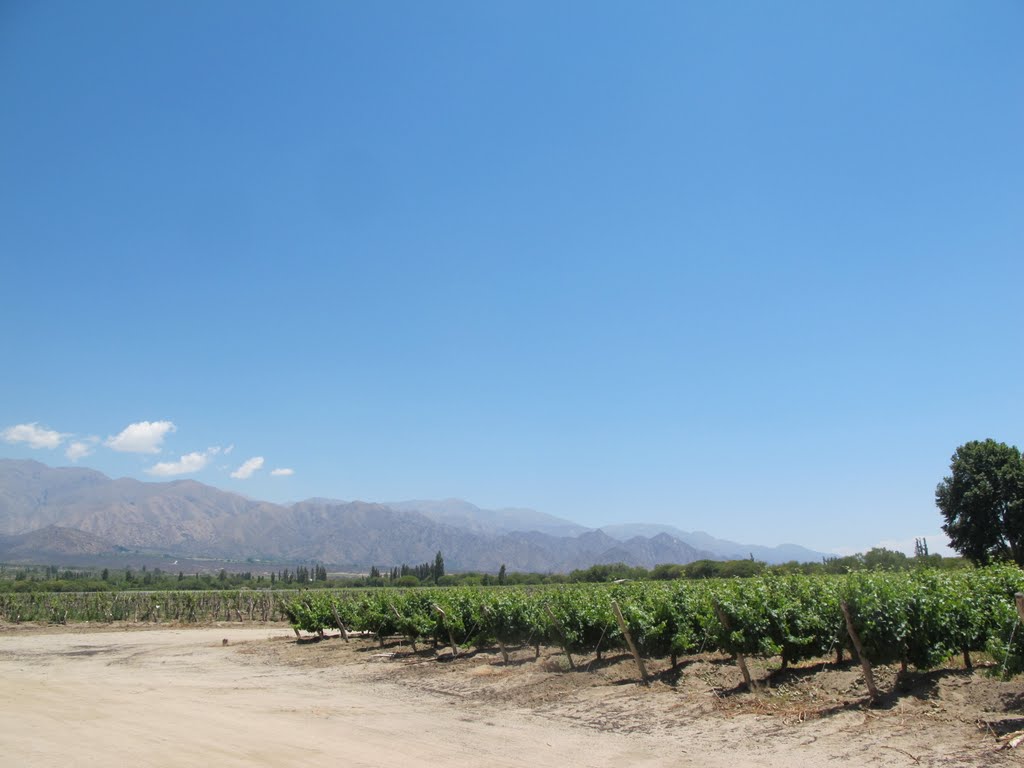
The Vasija Secreta vineyards - red grapes in fore ground


In Bodega Nanni - chilled Torrontes 
WINE country ! We are in Cafayate (pronounced ca-fa-cha-té) in Argentina. We were planning to come to this city 180km south of Salta with a car rental but unfortunately this did not happen. So we took a 4-hour bus down there. When we got to town we immediately proceeded to some serious wine tasting in the town bodegas (wine cellars).

Cafayate is a very small town which lives for its vineyards and it’s excellent wines. The biggest production of red wine are from Malbec and Cabernet Sauvignon. Tannat is the Argentinian favourite and excellent to accompany asados (BBQs). There is also a little Syrah and Merlot. 

Idyllic place to have lunch


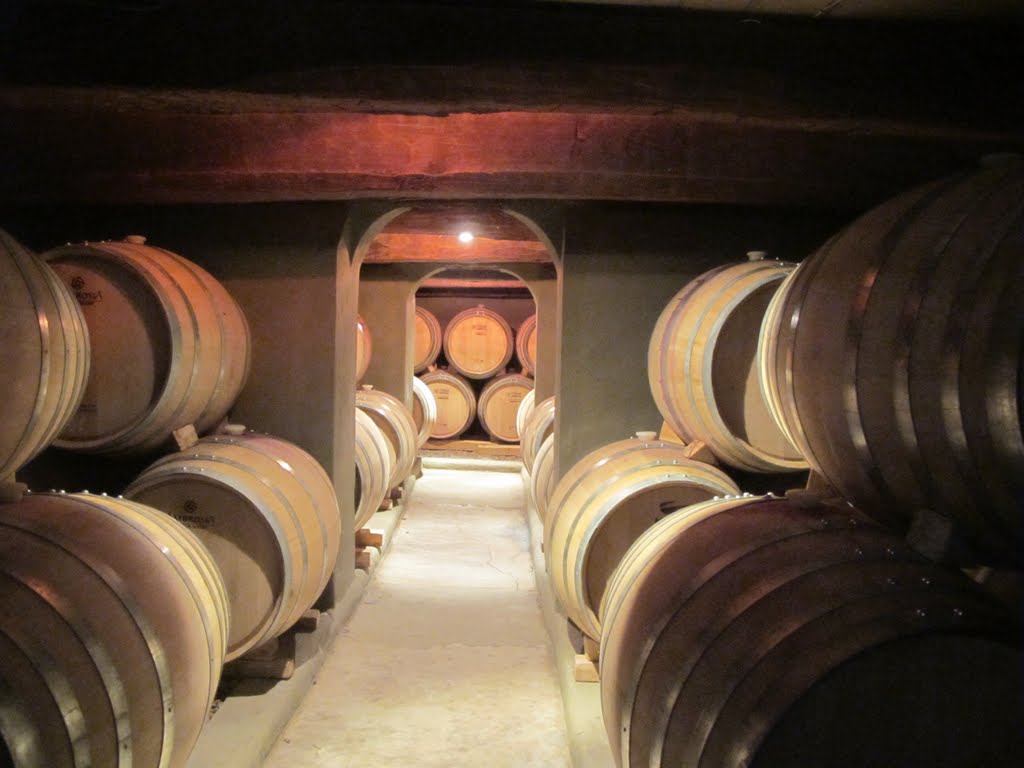
Wine in Cafayate are stored in 1m60 high cellars overground
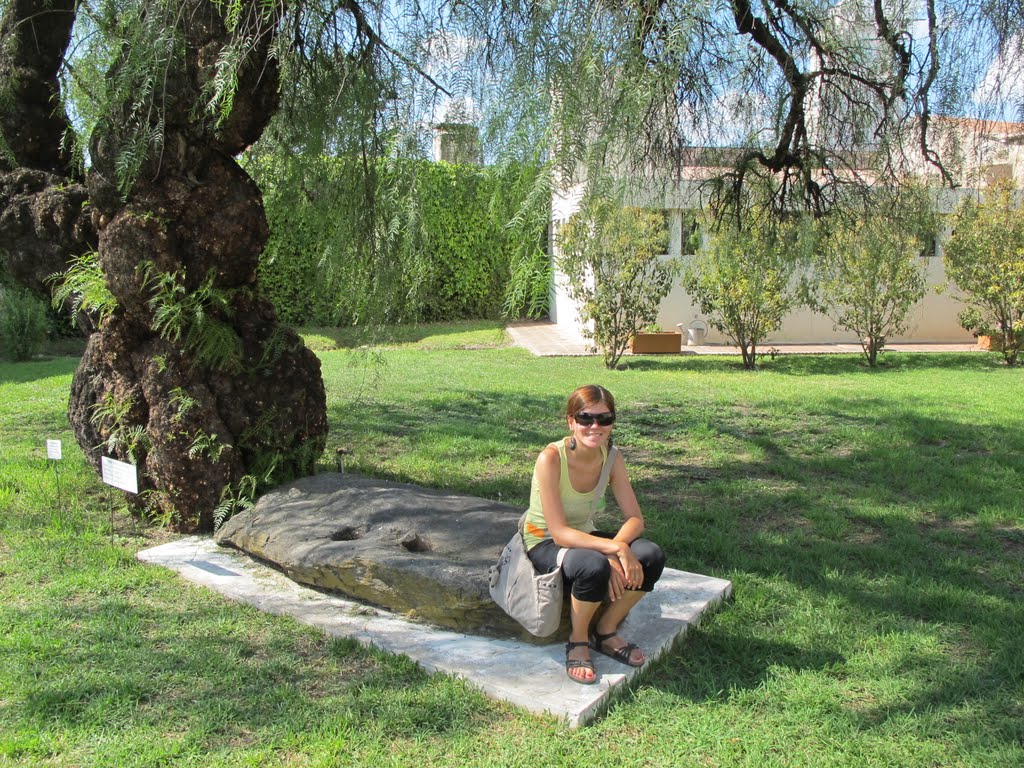
The white “cépage” is almost exclusively Torrontes: a pure Argentinian grape. There is a little Semillon blanc too. The white wine here is fresh, crisp and has a lot of citrus flavours to it, perfect to have as aperitif or to accompany a cold salad during the hot days here. Unfortunately, none of the white wine in Cafayate ever mature in wooden casks which would have given them a more complex palate and peaty flavours. But never mind. They also make a delicious desert wine with a late harvest Torrontes. It is amazing. I’m sorry could not stock up on wine here.


Preparing the Asado. 

Talking the night away with good food, wine and company
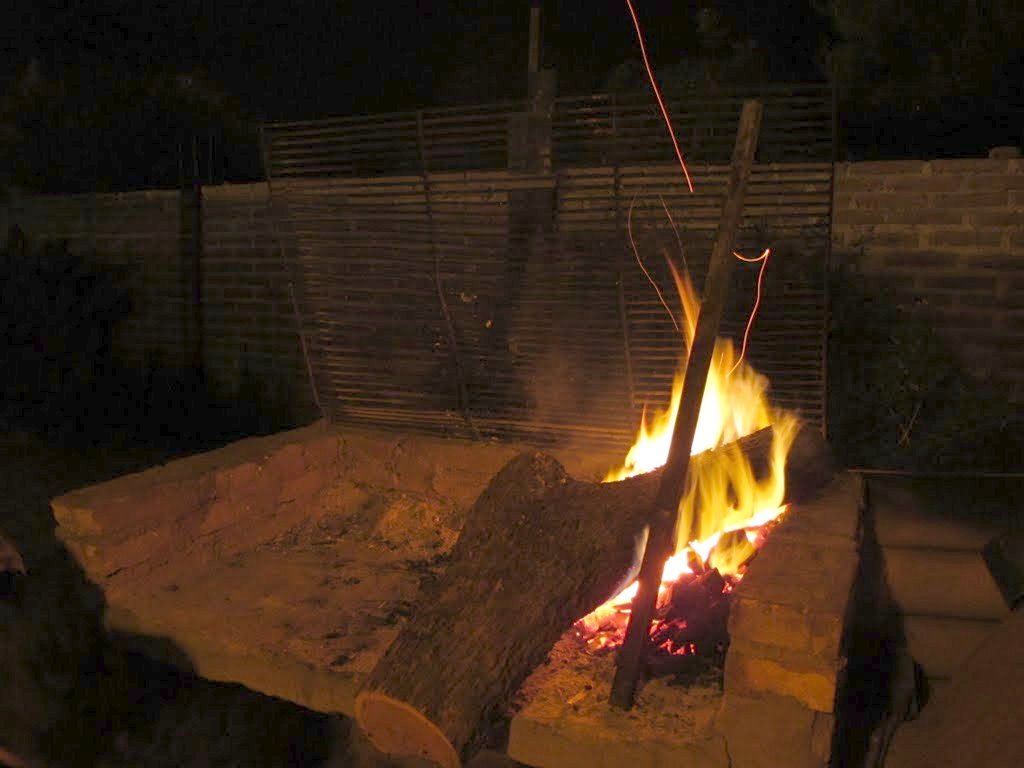
We nevertheless enjoyed them (a lot) while we were here. We bought a few bottles ranging from 28 Pesos (4,50€) to 40 Pesos (6€) and bought some excellent fillet and ribs to have a great BBQ at the hostel we stayed (Backpackers). We had dinner with Monty whom we met in the bus on the way to here, Charmaine of course, Carsten a German and two other Argentinians, Ignacio and Federico, travelling in their country on vacation. We had an excellent evening when we could quiz the locals about football, economy, politics and in particular the recent presidential elections that saw Cristina Hirshner being re-elected directly in the first round with 55% of the votes.


The Romanian flag in plastic cups!


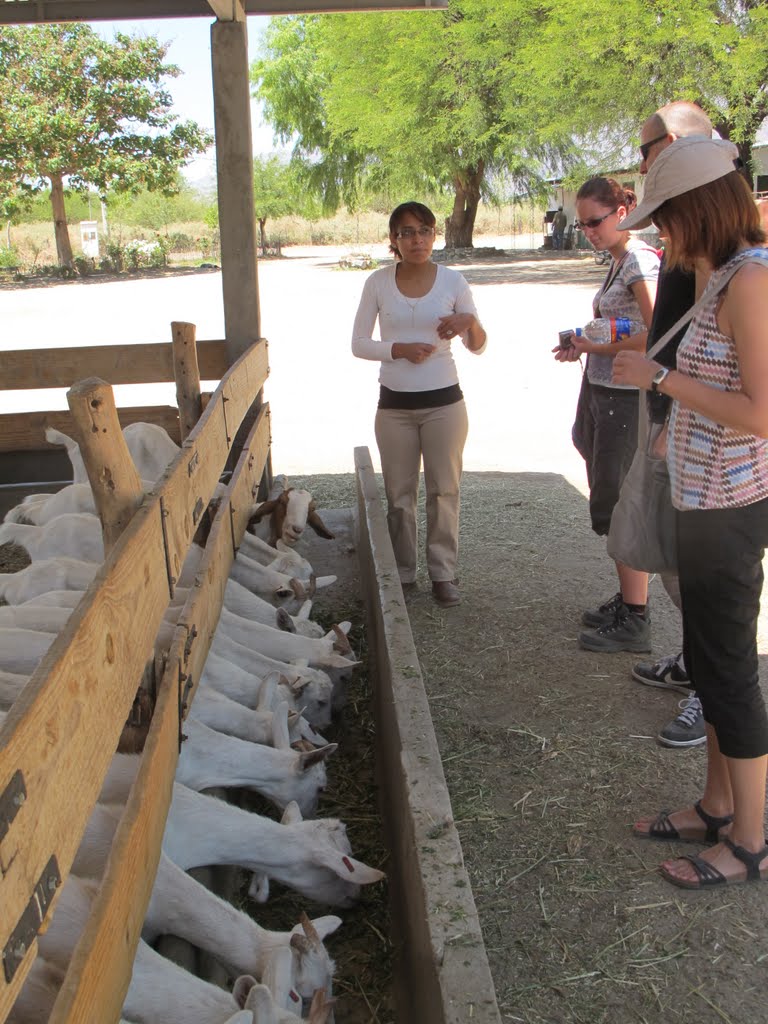
We're all ears while Mariel explains
The following day we decided to go get some real goat cheese from the cheese farm 2km away from our hostel. One of the major wine producers of Cafayate (Domingo Hermanos) decided that since cheese was a good complement to wine, they would start producing their own! So now they have 450 goats from Swiss, English and South African origins and they produce about 50kg of cheese a day. That's still very artisanal and the quality and the taste is there to prove it. We paid 20 Pesos for our tour and Mariel our host expertly guided us through the different stages of cheese making. Incredible fact: there is a race of Swiss goats whose males have got utters besides their testicles and they produce 2.5 litres of milk / day. So the phrase "Dilé Bouk" has all it's meaning and I think we all owe appologies to Nishal for all these years of bashing.  


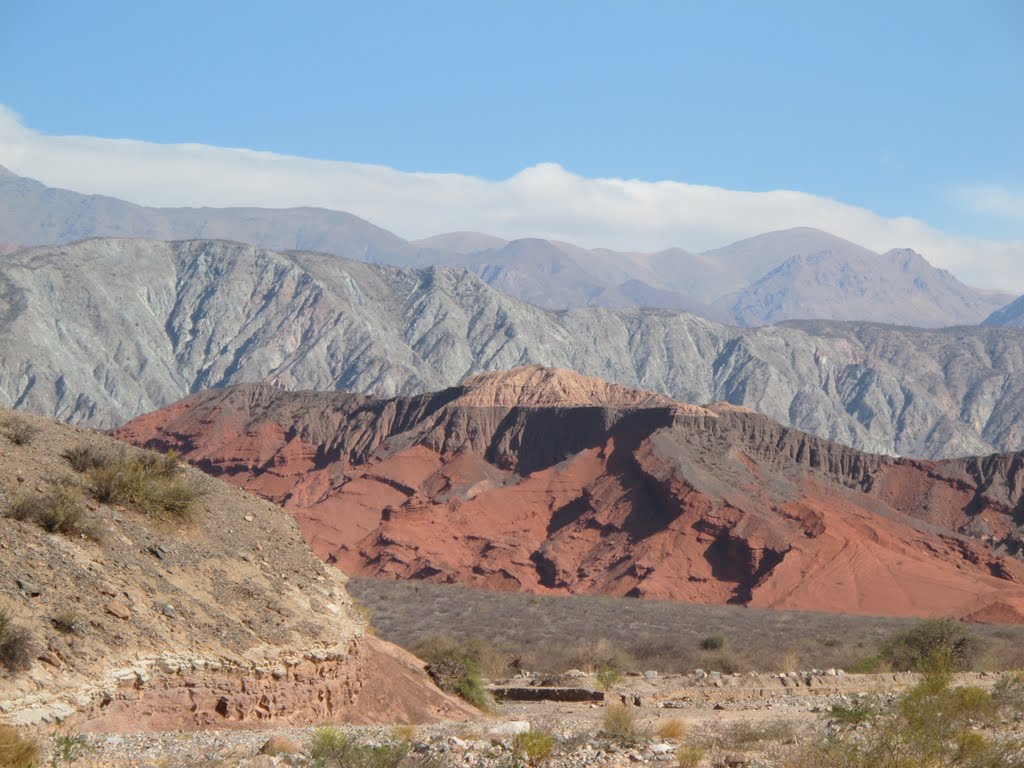
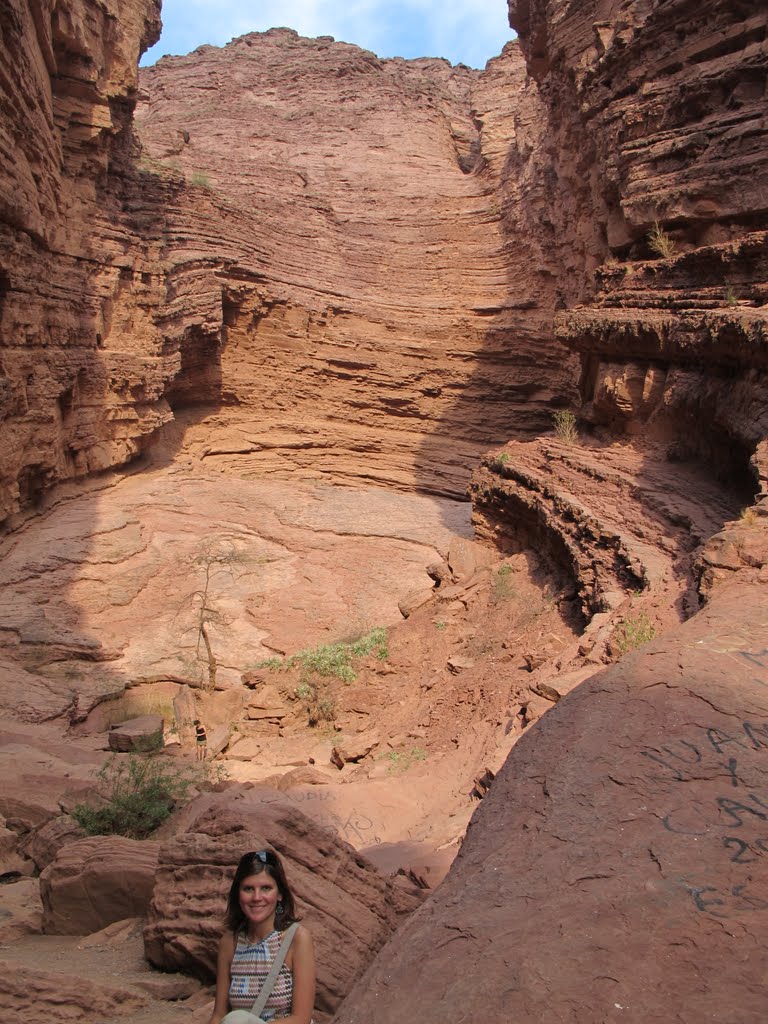
That afternoon we went to the Quebrada de las Conchas for some amazing scenery. I’m sorry that my picture taking skills are not better because I do not do justice to the sites. This is a photographer’s paradise. There are 50km of amazing scenery and we visited 6 of the main sites. Got back to town around 7pm, procured ourselves a few extra bottles of wine a had a quiet dinner at home.


The three colour mountain - oxidised ores

The "Amphitheatre"
We are relieved to be there
The next day we did something crazy: we did not go wine tasting!!! But rather we rented bikes and rode the 5km to the foot of the hills we intended to cross. We left our mounts in the sure hands of a lady selling fruits  and continued on our 6 hours trek to the waterfalls.

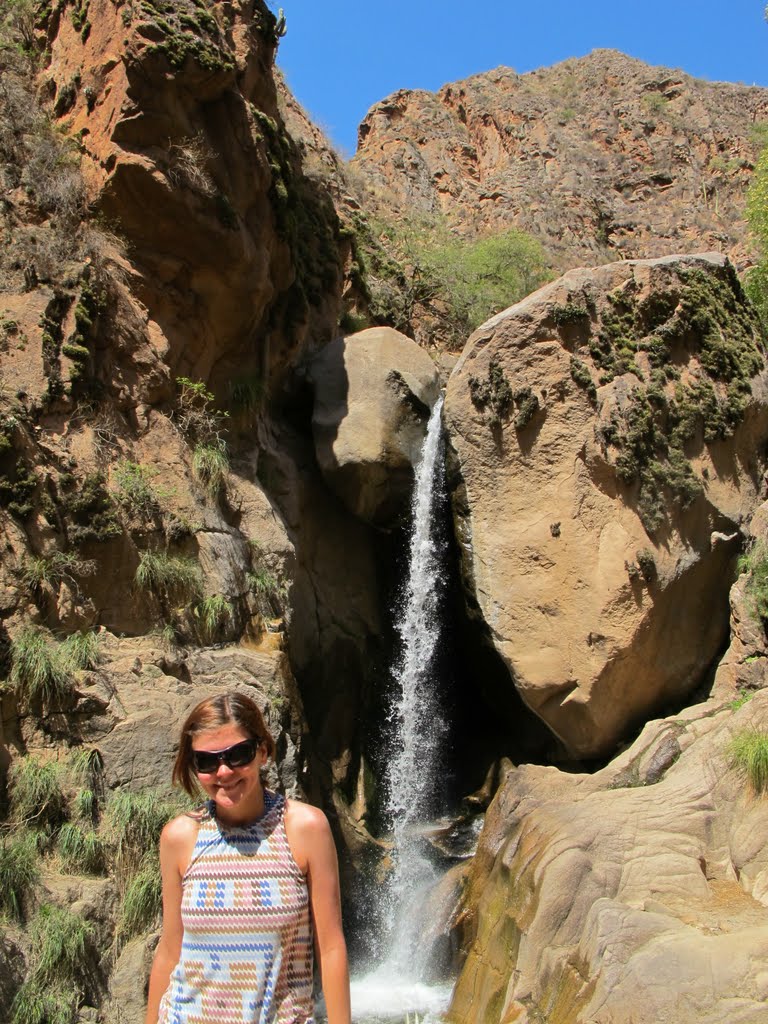
We did not hire a guide as there were none at the start of the trek but in retrospect that was a bad idea. We got lost so many times and crossed places we should not have a few times. We climbed rocks and dodged poisonous prickles but eventually made it to the waterfalls and back … safely. 


2nd Waterfall of the day

Yummy - I had Rice and Chicken
After having a long warm shower we went out have a meal in small restaurant recommended by our landlords where the locals congregate to watch football while eating excellent home made delicacies. After these few relaxing days in Cafayate, we return to Salta to pick up some stuff we left there and we will proceed to Córdoba.

More pictures on Cayafate

The usual ... 

Friday, 4 November 2011

Salta, Argentina


Beautiful sceneries on the way to Salta
When we arrived in Salta, Argentina, after a 10 and a half hour bus ride, Matias from Exxes Hostel was patiently waiting for us on the platform. He welcomed us with a big smile and a strong hand shake. We liked him at once. Since we were one more, (Sidsel  from Denmark had joined us), Matias arranged for one extra taxi. We got to our hostel after only 2 minutes!

The hostel was an old neo-colonial building (if that makes sense). There was an interior patio and we were invited to use it whenever it pleased us. We also saw the BBQ place and we were told by Sebastian, another staff member, that they would happily light some charcoal whenever we wanted to do an “asado” (Asado). That’s handy. We also met the rest of the staff: Fernando and Belen as well as Juan Pablo a.k.a Cusco, the boss. They were all so nice and helpful.

Anyway after we took our room, and Sidsel and Charmaine booked a dorm, we went into town to have a spot of dinner. Tim from New Zealand joined us for the meal. We had some fun with George our waiter. We called it a night around 11pm because we had to brace ourselves for the next day. It was Charmaine’s 24th b’day and we were planning a big night out!

The first of many. Bifé de Chorizo and Picana.
So on Friday we decided to take the advice of Sebastian and went to “El Viejo Jack” (Old Jack) for our very first Argentinian Steak. The portions were so big that we had a Picana and Bifé de Chorizo to share between us 5! Now you know how Argentinian beef is supposed to be the best in the world bla bla bla … well I’m sorry to say that this is not true … no Cecilia, your country’s beef is not the best in the world … it is the best in the U.N.I.V.E.R.S.E!!! Oh-my-good-God, this meat is something only people who have culinary orgasms when eating chocolate may understand. You know, of course we’ve come to South America for Macchu Picchu, the Galapagos, Easter Islands, Patagonia and the Brazilian Carnival but I also came for Argentinian beef ... honest!  

Charmaine and Roxana in the nightclub
Anyway after that first (of many I hope) dinner we came back home, opened the bottles of wine we had bought and then hit the clubs to celebrate Charmaine’s b’day. We got to the bar street and sure enough Charmaine was handed free drinks whenever she said it was her b’day. Then at about 1am we walked into a discotheque. It was big and crowded and Sidsel and Charmaine were in their element. We stayed a while and got a cab home around 4.30am, I think the girls returned at 6. 

After that big night out we had a veeeeeeeeery quiet Saturday and got some roast chicken and chips from the supermarket and ate quietly at home. On Sunday Roxana got a Chorizo from the supermarket and I got a 400g steak (Lomo en Tira). We went back home and got cooking. My beef ? Well just read my previous comment! 

Pic-nic in the park and a policeman watching the football

On Monday we caught a bus to Cafayate which is wine country. If there is one thing better than a great Argentinian steak, it’s an Argentinian steak with a nice bottle of Argentinian wine, we hope for both!

Tuesday, 1 November 2011

San Pedro de Atacama


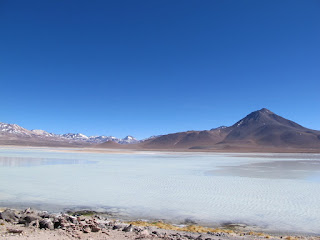
Lago Blanco (White Lake) in Bolivia borders Chile
After the magnificient Salt Flats in Uyuni, Bolivia we move towards Chile. The Jeep that brings us to the border leaves at 4am, meaning a 3.30am rise for us. The trip to the border takes 4 hours and we are freezing in the jeep. The inside windows of the vehicle are literally frosted up.

We finally arrive to the border and the immigration goes on smoothly. Sure enough, once again I had to explain where and what Mauritius was. This time they had a World Map on which I could show where the island lies. They were quite interested to see how far it was from Chile and wanted to know by what means I got to South America. After this we drive into San Pedro de Atacama.
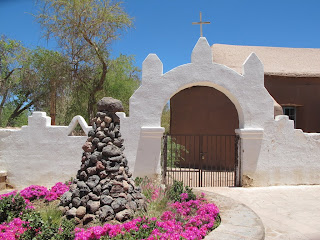
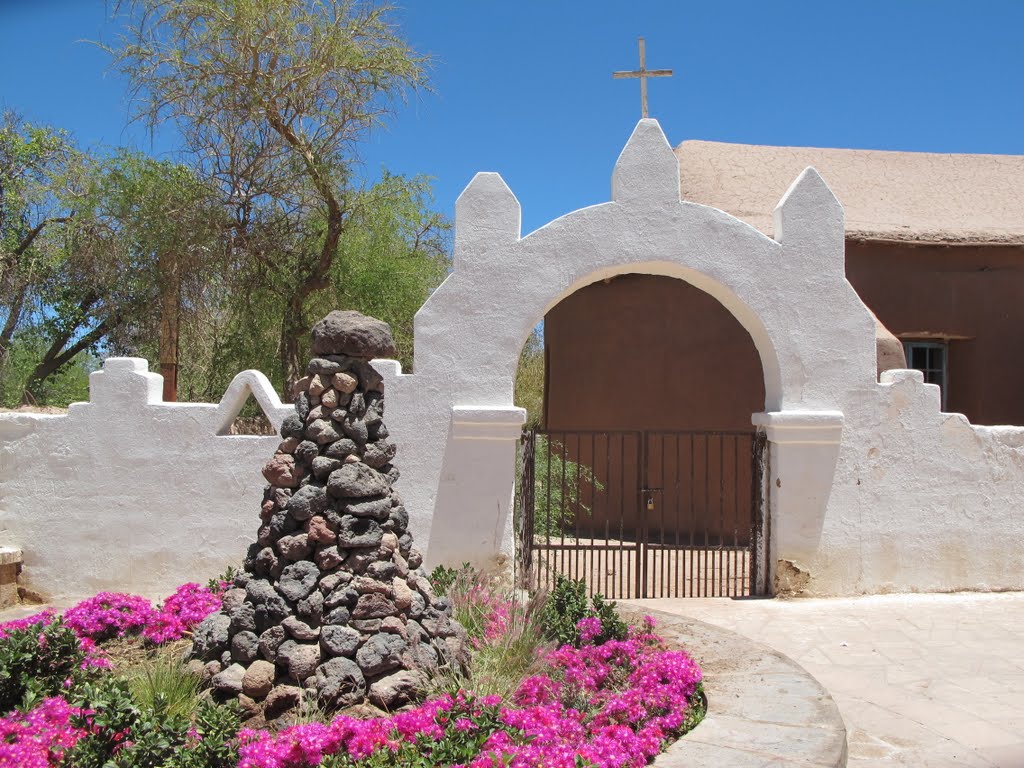
The beautiful small town of San Pedro with white walls
San Pedro de Atacama is a beautiful white washed desert village where 2000 relaxed souls lead a peaceful life only disturbed by the occasional tourist who uses this village as a point of entry into Chile. We take our quarters in a nice little hostel with a beautiful interior yard filled with hammocks, garden chairs and tables and a few matresses to lie down and sunbathe. There is also a nice barbecue set up and a central fire place for a camp fire.
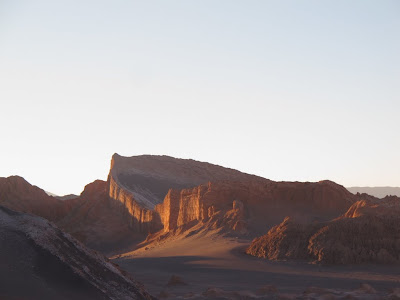


Beautifully sunlight valley cliffs at sunset


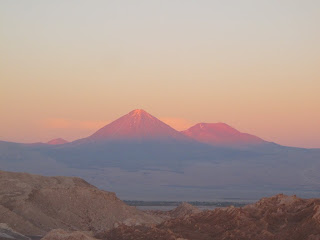
Lickancabur and Láscar
The Atacama desert is the driest place on earth. It receives about 12mm of rain a year! It is a most amazing place. We took a tour into the Valle de la Luna (Valley of the Moon) and enjoyed again more breathtaking sceneries and yet another magnificent sunset. The Volcanoes Lickancabur and Láscar towering at 6000m and 5590m respectively on the other side of the valley is tainted with a beautiful pink hue at sunset.
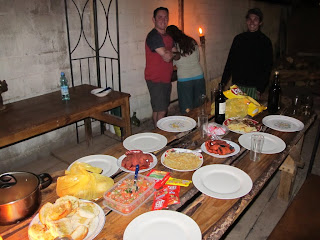


Table's set for dinner
When we return, we put the chicken we had marinated and some Chorizo on the barbecue that is now red hot. Charmaine stayed back to prepare some pasta salad and Steve whipped up some garlic butter for the bread.

Jonathan and Titiana who live on Reunion Island and whom we met in Bolivia accepted our invitation and turned up with some more sausages and ice cold beer. We had of course procured ourselves some excellent Chilean white and red wine. This was a long awaited treat as in the first three countries we had been, locally produced wine had been well below standards and imported wine very expensive. So to be able to enjoy again some crisp cold Chardonnay was a treat for my taste buds. After having feasted on this delicious meal we sat down by the fire which David has masterly lit.

Enjoying the wine, warmth and good company
More pictures on San Pedro de Atacama

The other highlight of our stay in San Pedro was the unforgettable visit to the star observatory. We headed out there at 11pm for the English tour. Lars, from Hamilton, Ontario, Canada, welcomed us and immediately started giving us the first part of the tour: "star gazing from antiquity to 402 years ago" when Galileo Galilei proved that Copernicus’ theory about the rotation of the Earth around the Sun was true.

Lars' fantastic story telling talents and sophisticated sense of humour gripped us from start to finish. We (almost) forgot that the temperature of the air was around 6°C. He told us about the origin and importance of the three main time units people lived by then : days, months and years. He also showed us 5 of the twelve zodiac constellations that could be seen at this time of night and year in this hemisphere.

Then we moved to the second part of the tour: actual star gazing! They have 10 high power telescopes set up to look at different things. The relatively “small” telescopes cost anything between US$40.000 and US$100.000 each. We had a look at the Andromeda Galaxy and it’s 200-400 billion stars, Beetle Juice  600 light years away and which scientists say could explode into a supernova anytime between now and the next 10.000 years which is obviously nothing in cosmic time. We looked the big and small Magellanic clouds too.
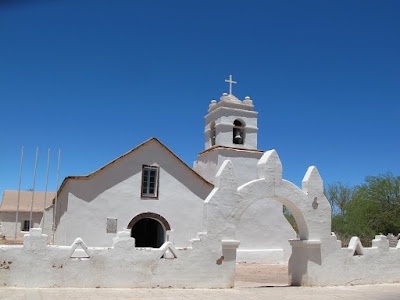
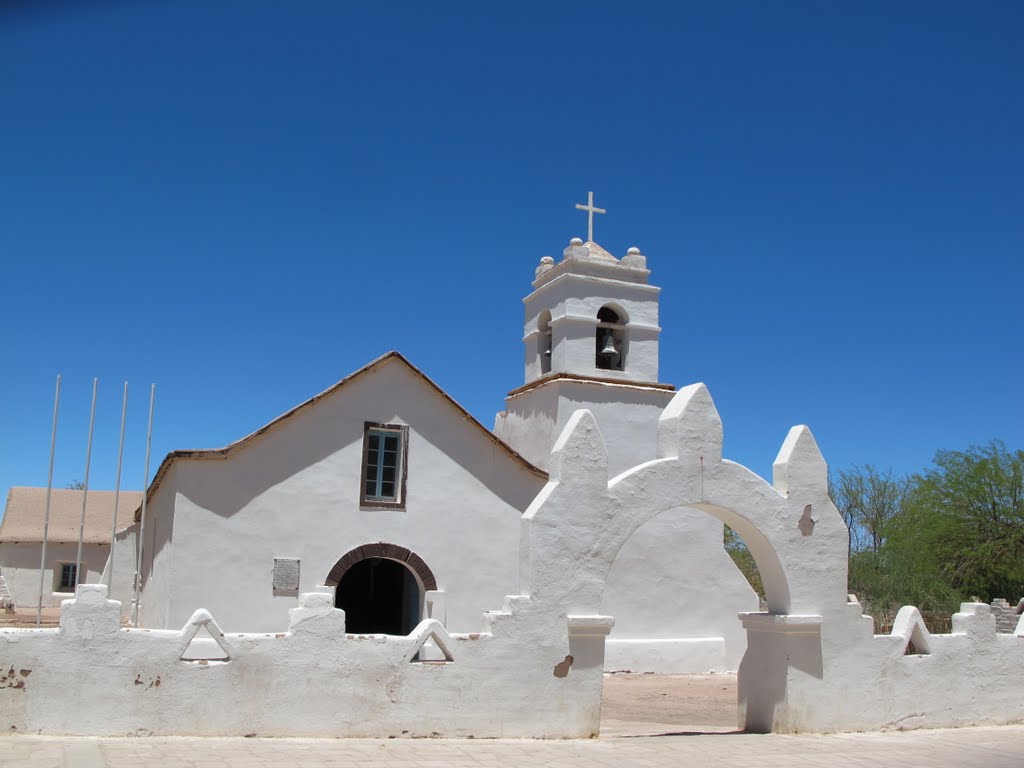
Beautiful church on the Plaza de Armas

But the best part of the night was to see Jupiter through a 125x high gain telescope. We could clearly see the horizontal patterns running across the planets face. Jupiter has 11 times the diameter of the earth and has a huge dark spot the size of the Earth (a cyclonic formation) running across its surface and we saw that too. I could also clearly see 3 moons of Jupiter while only discerning a 4th one (Jupiter has about 64 moons).

Then we went into a warmer place inside for the 3rd part of the night : Questions and Answers. Lars opened the floor and insisted there were no taboo questions, neither stupid ones. Sure enough the first question was : Do you believe that  intelligent life exists somewhere else in the Universe ? I loved the way he answered this question. He began by saying that there are two parts to that question, namely could there be life elsewhere in the Universe and if so could it be intelligent.

To the first part he gave us some facts and told us we could probably answer the question ourselves :from latest 2001 data we’ve received by looking at a little bit of dark sky 1/13.000.000th of the total north and south hemispheres, we discovered about 10.000 new galaxies we had never seen before because of light pollution of other stars. And since the scientific community agrees that the average number of stars in any galaxy is 100 billion, then purely statistically, the number of stars in the universe could be = 13.000.000 little bits of sky x 10.000 undiscovered galaxies x 100.000.000.000 average n° of stars =  13.000.000.000.000.000.000.000 stars in the universe.  So he asked if any of us really believed that we could be the only star (solar) system to have a planet with life on it … I think everyone came to the same conclusion.

The second part of the question was even more interesting. He said that if there are intelligent life forms out there, we (humanity) would probably live our entire period (however long this might be) without ever managing to catch a single signal from ETI (Extra Terrestrial Intelligence). He gave us some information so that it would be easier to have a feel for it. I actually loved his “Bill Bryson” style : he said that even if there was ETI out there emitting signals in a form and at frequencies we could receive,  we would have as much chance of “seeing” the signal as seeing with our eyes a camera flash 1000km away across an ocean.
He also told us something I did not quite realize : The more advanced a civilization is, the less “cosmic noise” they make. For example for us, the most signal we’ve emitted in our history was between the 1900’s and the 1970’s. We have then “evolved” to better techniques of information transmission such a fibre optics. So the “loudest” we’ve been was a short 70 years in our 100.000 years in our history. That’s where the analogy with the camera flash comes from.

He also showed us in the distance the ALMA (Link to ALMA Project) project being built. This US$1.2 billion project planning to install 50 radio signal receivers is th second biggest scientific project in the world behind the CERN (particle accelerator) in Switzerland. The project is financed by the EU, Japan, the US and Canada.

They chose this location because the Atacama desert is the driest place on Earth. You see, water vapour blocks a lot of the signal and here there isn’t much. On top of that they will pace the complex at about 5000m altitude which will also eliminate half of the atmosphere density.

We finished this great night out at 2am and went immediately to bed as we had a bus at 9am to Salta, Argentina.
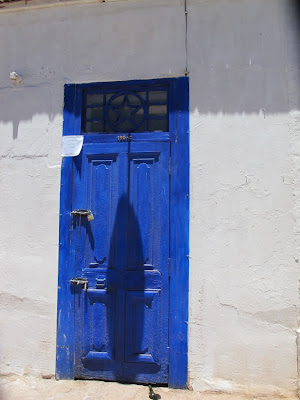
Quite symbolic, a blue door to Argentina!